Many years ago, when my sons were still in elementary school, and their dad and I were married, they built a fourteen-foot-by-fourteen-foot raised garden for me as a gift on Mother’s Day.
As the years passed, we discovered that it was not in the best location in our yard because the trees were filling in, which was good on one hand, but on the other, it blocked out the necessary sun needed for the garden to have healthy growth.
Furthermore, it was located at the back of the yard where the engineered slope naturally drained the rainwater. However, because of that slope, our once-lush vegetable plants suffered water damage in our Michigan garden.
So, after a divorce and a lack of willing manual laborers, I have decided to grow vegetables and herbs again but in containers this time. I am not sure what type of containers yet, but I do have an idea of where in my large yard I will position them.
For example, I have a large, ¾-acre corner lot, which gives me essentially three to four separate areas in the yard to choose from. I am leaning towards using the southwest side of my yard, as it gets plenty of sunshine and is outside the fence, so my dogs won’t be able to run through it or eat the vegetables before I get a chance to harvest them.
According to Northern Gardener, “Growing vegetables in containers is fun and easy, as long as you have three elements working together: container size, proper light and good potting soil.
Selecting a Container
To get started, find a large container, roughly the size of a 5-gallon bucket. That shape can vary, of course, but that’s the ideal minimum volume. I would not use anything less than 10-12” deep.
Finally, fill your large container with good potting soil. If you have old potting soil from last year that you want to re-use, that’s fine, but mix it 50/50 with new compost first.
Finding the Right Location
Next, stick that container in the sunniest spot you have. Almost all vegetables require full sun, which means 8+ hours.
So what vegetables are good to grow in containers?
Peppers
Basil
Potatoes
Lettuce/greens
Onions,”.
From sources across the web, I found that these vegetables, too, can grow well in containers:
- Radishes
- Eggplant
- Cucumbers
- Squash/Zucchini
- Kale
- Carrots
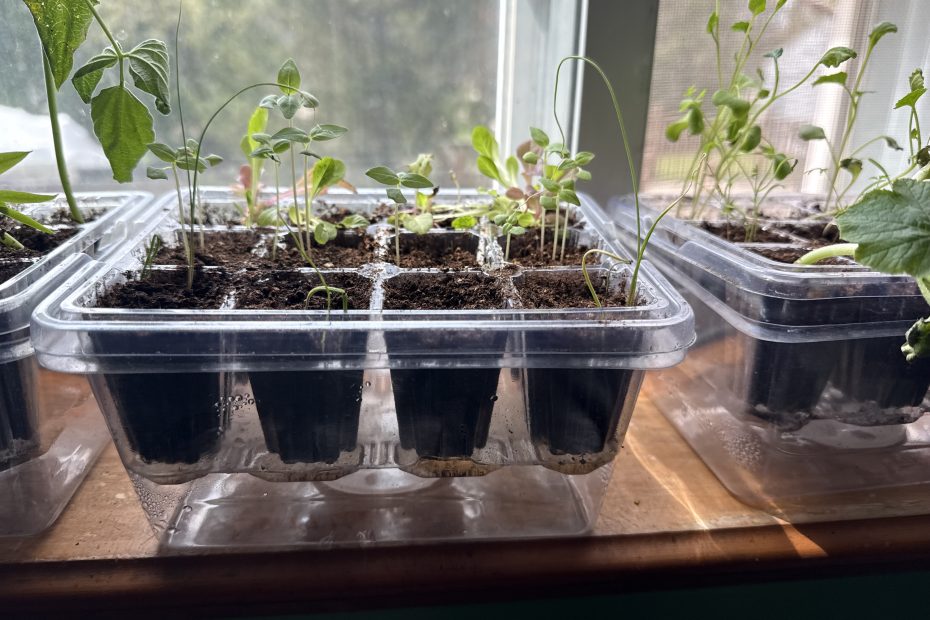
Oh, good to know zucchini can grow in containers! I started some seedlings about four weeks ago, eleven different vegetables to be exact, and they will need to be planted very soon as they are busting out of the little seed starters. This year’s container vegetables include:
- Carrots
- Garlic
- Basil
- Zucchini
- Cucumbers
- Peas
- Broccoli
- Green beans
- Jalapenos
- Tomatoes
- Lettuce
Do vegetables grow better in pots or ground?
When I had my fourteen-by-fourteen-foot garden bed in the back yard, before the flooding and too much shade ruined that spot, our vegetables grew very well in the ground. Although it did require a lot of weeding and maintenance, which I have learned is not as necessary and is more manageable when grown in pots/containers.
Back then, once the “fruits of our labor” began to sprout, I enjoyed watching my youngest snack while he was playing outside. He loved to eat at his own leisure by going to the garden, grabbing cherry tomatoes and green onions, and eating them while sitting in his treehouse, attached to the top of his swing set.
We grew the following vegetables and herbs:
- Lettuce
- Cucumbers
- Zucchini
- Carrots
- Peas
- Green onions
- Oregano
- Basil
- Cilantro
- Roma tomatoes
- Cherry tomatoes
During the summer, as our garden began to bloom, we noticed that our Labrador/Pitbull mixed dog, named Phoebe, also enjoyed the garden because she kept stealing our tomatoes before they were ripe and red. I guess she preferred the green tomatoes! Phoebe would also dig up our carrots and eat them whole – dirt and all.
One afternoon, we realized that Phoebe was not only eating the carrots but also digging up that area of the garden. Although what I am about to say may sound like a fictional story, I assure you that I am not making this up.
When attempting to fix the area Phoebe dug up, we realized what our beloved K9 was trying to tell us. She found that a mama rabbit had made a nest with her babies in our carrots – oh, the irony! Ha, ha, silly Phoebe.
Besides eating and cooking healthy, healing was going on the inside of my children, and they didn’t even see it coming! Yes, I am a very, very sneaky mama! Gardening, or horticultural therapy as it is technically known, has been shown to improve memory, cognitive abilities, task initiation, language skills, and socialization. In a physical sense, horticultural therapy helps strengthen muscles, improve coordination, balance, and endurance.
Benefits of gardening
As far as the environment is concerned, gardens have a natural ability to cleanse the air and soil and to create habitats for birds and insects. While soil erosion is prevented, it reduces CO2 emissions, improves stormwater management, and, in most cases, provides a buffer against flooding and water pollution.
Psychologically, the naturally occurring bacteria in the soil we gardened activated our brain cells to produce serotonin and grounded us in the present moment, helping us achieve a mindful state of being.
Health-conscious, forward-thinking companies offer on-site gardens as a wellness perk. For example, Google has tens of thousands of square feet of gardening space at its Mountain View campus in California. Furthermore, they provide their employees with opportunities to take cooking classes, allowing them to learn how to make the most of the gardening benefits.
From the National Institute of Health, “Horticultural therapies are part of an emerging strand of social prescribing known as ‘green prescribing,’ and this paper identifies military veterans with PTSD and continuing/debilitating psychological and mental health concerns as an identifiable study group who can benefit from this alternative approach,”.
Here are some more health benefits of gardening/horticultural therapy:
- Help fight disease
- Build strength
- Improve memory
- Reduces stress
- Helps addiction recovery
- Fosters human connections to combat loneliness
- Heals and empowers
- Helps to manage eco-anxiety
- Exposure to vitamin D
- Decreased dementia risk
- Mood-boosting benefits
- Enjoyable aerobic exercise
What vegetables grow well in a container
In conclusion, container gardening is a practical, rewarding solution that delivers fresh vegetables, meaningful health benefits, and pure joy — right outside your door.